

The holidays are supposed to be the most wonderful time of the year, right?
Beautiful decorations.
Family gatherings.
Delicious food.
Thoughtful gifts.
And all those magical moments we're somehow expected to create.
But can we talk about something for a moment?
Why does making the holidays wonderful for everyone else sometimes leave us feeling completely exhausted?
Maybe you're the one organizing the family dinner.
Remembering everyone's gifts.
Planning the meals.
Making sure nobody feels left out.
Agreeing to invitations even when your calendar is already overflowing.
And somewhere in the middle of it all, you realize you've barely thought about what you actually want this holiday season.
Sound familiar?
Here's something I want you to consider.
You can love your family, enjoy the holidays, and care deeply about the people in your life without being responsible for everyone's happiness.
And you can set boundaries without becoming selfish, difficult, or unkind.
Let's talk about how.
Why Is Setting Boundaries With Family So Difficult?
Have you ever said yes to something when every part of you wanted to say no?
Maybe someone asked you to host Christmas dinner again.
Or a family member expected you to attend an event you genuinely didn't have the energy for.
Or you agreed to buy gifts for people outside your budget because you didn't want anyone to feel disappointed.
In the moment, saying yes probably felt easier.
No uncomfortable conversation.
No disappointed expressions.
No need to explain yourself.
But later?
You might feel frustrated, overwhelmed, or even resentful.
And then comes the guilt.
Why am I so irritated?
They're my family. I should want to do this.
Maybe I'm being selfish.
I think many women have become so accustomed to putting other people's needs first that considering our own needs can feel uncomfortable.
Especially during the holidays.
Family traditions, childhood expectations, and the roles we've played for years can make it difficult to do things differently.
If you've always been the organizer, the peacekeeper, or the person everyone depends on, changing that pattern may surprise people.
But someone being surprised by your boundary doesn't automatically mean the boundary is wrong.
What Are Healthy Boundaries, Really?
I think boundaries sometimes get a bad reputation.
People imagine they're about shutting others out, being cold, or refusing to compromise.
But that's not what healthy boundaries are about.
Healthy boundaries are a way of communicating what you're comfortable with, what you're available for, and what you need to maintain your wellbeing.
They help clarify where your responsibilities end and someone else's begin.
For example:
You can love your family without attending every gathering.
You can be generous without spending money you don't have.
You can care about someone's feelings without agreeing to everything they ask.
And you can enjoy helping others without making yourself available all the time.
Boundaries don't guarantee that everyone will be happy with your decisions.
But they can help you make choices that are more honest, realistic, and respectful of your needs.
Five Signs You Need Better Boundaries During the Holidays
Sometimes we don't realize how much we're taking on until we're already overwhelmed.
Here are a few signs that your holiday boundaries might need a little attention.
1. You're Saying Yes Before Checking In With Yourself
Someone sends an invitation.
You immediately respond, "Of course!"
And then you look at your calendar.
You already have three commitments that weekend, a house to prepare, and approximately seventeen things you haven't started.
But now you've agreed.
And you don't want to disappoint anyone.
If this sounds familiar, you might benefit from giving yourself a little space before answering.
A simple "Let me check and get back to you" can make a surprising difference.
2. You're Responsible for Everyone Having a Good Time
You're making sure the food is perfect.
Checking that everyone has something to drink.
Worrying whether someone feels left out.
Trying to keep conversations pleasant.
And silently monitoring the entire room.
Meanwhile, you're barely enjoying the gathering yourself.
There's nothing wrong with being thoughtful.
But there's a difference between creating a welcoming environment and feeling responsible for managing every person's experience.
You can contribute to a lovely celebration without controlling every detail.
3. You're Spending More Than You're Comfortable With
The holidays can bring enormous pressure around gift-giving.
Maybe you want to buy something special for everyone.
Maybe there's an unspoken expectation about how much should be spent.
Or perhaps you feel guilty when you can't give as much as you would like.
But generosity doesn't have to come at the expense of your financial wellbeing.
Setting a gift budget is a boundary, too.
And it's a perfectly reasonable one.
4. You're Feeling Resentful About Your Commitments
Resentment can sometimes be a clue that we've agreed to more than we genuinely wanted to take on.
Maybe you're annoyed that nobody offered to help.
Or frustrated that you're expected to host again.
Or irritated that your plans always seem to revolve around someone else's preferences.
Rather than judging those feelings, get curious about them.
What expectation is underneath the frustration?
Is there something you need to communicate?
Is there a responsibility that could be shared?
Sometimes resentment points toward a conversation we've been avoiding.
5. You Have No Time Left for Yourself
This might be the biggest one.
Your calendar is filled with shopping, gatherings, cooking, decorating, appointments, and other people's plans.
But there's nothing in it for you.
No quiet afternoon.
No time to recharge.
No room to simply enjoy the season.
You don't need an elaborate holiday self-care routine.
But you do deserve a little space in your own life.
And sometimes that means saying no to something else.
Seven Ways to Set Holiday Boundaries Without Unnecessary Guilt
Let's make this practical.
Because knowing you need boundaries and actually communicating them are two very different things.
1. Decide What Matters Most Before the Invitations Arrive
Before your calendar fills up, ask yourself:
What do I actually want this holiday season to feel like?
Maybe you want more quiet evenings at home.
More time with your children.
Less rushing between houses.
A simpler Christmas dinner.
Or fewer financial obligations.
Choose two or three priorities.
Then use them as a guide when deciding what to accept.
You don't have to attend every event simply because you've always attended it.
2. Stop Answering Immediately
Here's a small change that can make a big difference.
You don't need to give an immediate answer to every invitation or request.
Try saying:
"That sounds lovely. Let me check what we have planned, and I'll get back to you."
Or:
"I need to think about what I can realistically manage this year."
This gives you room to make an intentional decision instead of agreeing out of habit.
And you may discover that a little breathing room helps you make choices with less regret.
3. Remember That No Is a Complete Response
I know this one can feel uncomfortable.
Especially if you're used to explaining every decision.
You might feel the need to provide a detailed reason for declining an invitation.
But sometimes a simple, kind response is enough.
"Thank you so much for inviting us, but we won't be able to make it this year."
That's it.
You don't need to invent an excuse.
You don't need to justify your entire schedule.
And you don't need to turn a reasonable decision into a negotiation.
You can be warm and firm at the same time.
4. Share the Holiday Responsibilities
If you're hosting, you don't have to do everything yourself.
Ask guests to bring a dish.
Invite family members to help with decorating or cleaning up.
Let someone else organize an activity.
And if you're feeling overwhelmed by expectations, have a conversation before the event rather than hoping someone notices.
You might say:
"I'd love to host, but I can't manage the entire meal myself. Would everyone be comfortable bringing something?"
The people who love you may not realize how much you're carrying unless you tell them.
5. Create Boundaries Around Gift-Giving
You are allowed to decide what feels comfortable for your budget.
You might suggest:
A spending limit.
A family gift exchange.
Gifts only for the children.
Homemade or experience-based gifts.
Skipping gift exchanges altogether.
You could say:
"We're keeping things simpler financially this year, so we're changing how we do gifts."
You don't need to feel embarrassed about making choices that support your financial wellbeing.
6. Protect Time to Recharge
Not every free moment needs to become another appointment.
If you know that several social gatherings in a row leave you feeling overwhelmed, try building some breathing room into your calendar.
Maybe that means keeping one evening a week free.
Or planning a quiet morning after a busy family event.
Or simply deciding that you're not available every weekend.
Rest doesn't have to be earned by completing everything on your to-do list.
It deserves consideration from the beginning.
7. Allow Other People to Have Their Feelings
This might be the hardest boundary of all.
You can communicate respectfully.
You can explain your decision kindly.
You can listen to someone's disappointment.
And they still might not like your answer.
That's uncomfortable, especially if you're accustomed to keeping everyone happy.
But another person's disappointment doesn't automatically mean you've done something wrong.
You can care about their feelings without changing your decision simply to make the discomfort disappear.
And that takes practice.
Five Things You Can Say When Family Members Push Back
Sometimes the most difficult part of setting boundaries is finding the words.
So here are five simple phrases you can adapt to your own situation.
When You're Expected to Host Again
"I'd love to spend time together, but I'm not able to host this year. Let's talk about another option."
When Someone Expects You to Attend Every Gathering
"We're keeping our schedule a little quieter this year, so we won't be attending everything. Thank you for understanding."
When You're Feeling Pressured About Gifts
"We've decided on a smaller gift budget this year. We'd love to focus more on spending time together."
When Someone Asks an Uncomfortable Personal Question
"I'd rather not get into that today. Let's talk about something else."
When Someone Doesn't Accept Your First No
"I understand that you're disappointed, but this is what works best for us this year."
Notice something about these responses?
They're not rude.
They're not aggressive.
And they don't require you to apologize for having needs.
They're simply clear.
And clarity can be a very kind thing.
What If You Still Feel Guilty After Setting a Boundary?
Let's talk about this, because it's important.
Setting a boundary doesn't always make guilt disappear.
Especially if you've spent years being the person who keeps everyone comfortable.
You might say no to an invitation and then spend the next three hours questioning your decision.
Was that selfish?
Should I have just gone?
What if they're upset with me?
That doesn't necessarily mean you made the wrong choice.
Sometimes it means you're doing something unfamiliar.
Instead of immediately changing your mind, try asking yourself three questions:
Was my boundary reasonable? Did I consider my actual capacity, needs, and responsibilities?
Did I communicate it respectfully? Was I clear without deliberately trying to hurt someone?
Am I feeling guilty because I've done something harmful, or because someone is disappointed?
Those are not always the same thing.
Sometimes guilt is telling us we've acted against our values.
Other times, it's simply discomfort with changing an old pattern.
Learning to recognize the difference can help you respond more thoughtfully.
And remember, healthy relationships involve flexibility.
Boundaries aren't about always getting your own way.
They're about making room for your needs alongside the needs of others.

A Simple Holiday Boundary Reset You Can Try Today
If all of this feels like a lot, I want to make it easier.
You don't need to change every family dynamic this holiday season.
You don't need to confront everyone.
And you certainly don't need another complicated personal-growth project.
Start with one situation.
Take a few quiet minutes and ask yourself:
Step 1: What feels overwhelming?
Maybe it's hosting dinner, buying too many gifts, attending every gathering, or managing difficult conversations.
Step 2: What do I actually need?
More time? A smaller budget? Shared responsibilities? A little privacy?
Step 3: What boundary would support that need?
Choose something specific and realistic.
Step 4: How can I communicate it kindly?
Write down one simple sentence.
Step 5: Can I allow myself to feel uncomfortable without immediately changing my decision?
That last part is often where the real practice begins.
You don't need to fix everything at once.
One honest boundary is a meaningful place to start.
Your Energy Matters, Too
I often talk about energetic boundaries because I believe there's value in noticing how different experiences affect us.
Have you ever left a family gathering feeling completely drained?
Not necessarily because anything terrible happened.
But because you spent the entire time monitoring conversations, anticipating people's needs, and trying to keep everyone comfortable.
You might arrive home feeling like you've given all your attention away.
For me, energetic boundaries are a helpful way of describing the intention to be more mindful about where we place our time, emotional attention, and effort.
It's not about blaming other people for how we feel.
It's about noticing our patterns.
When do we overextend ourselves?
When do we ignore our own needs?
When do we say yes out of genuine willingness, and when do we say yes because we're afraid to disappoint someone?
These are valuable questions.
And they can help us create relationships and traditions that feel more balanced.
Ready to Stop Overgiving? Explore the Sacred Boundary Reset Kit
If you've been recognizing yourself throughout this article, I want to share something I created with women like you in mind.
Women who care deeply.
Women who give generously.
Women who are often the ones everyone else depends on.
But who are beginning to realize that their own needs deserve attention, too.
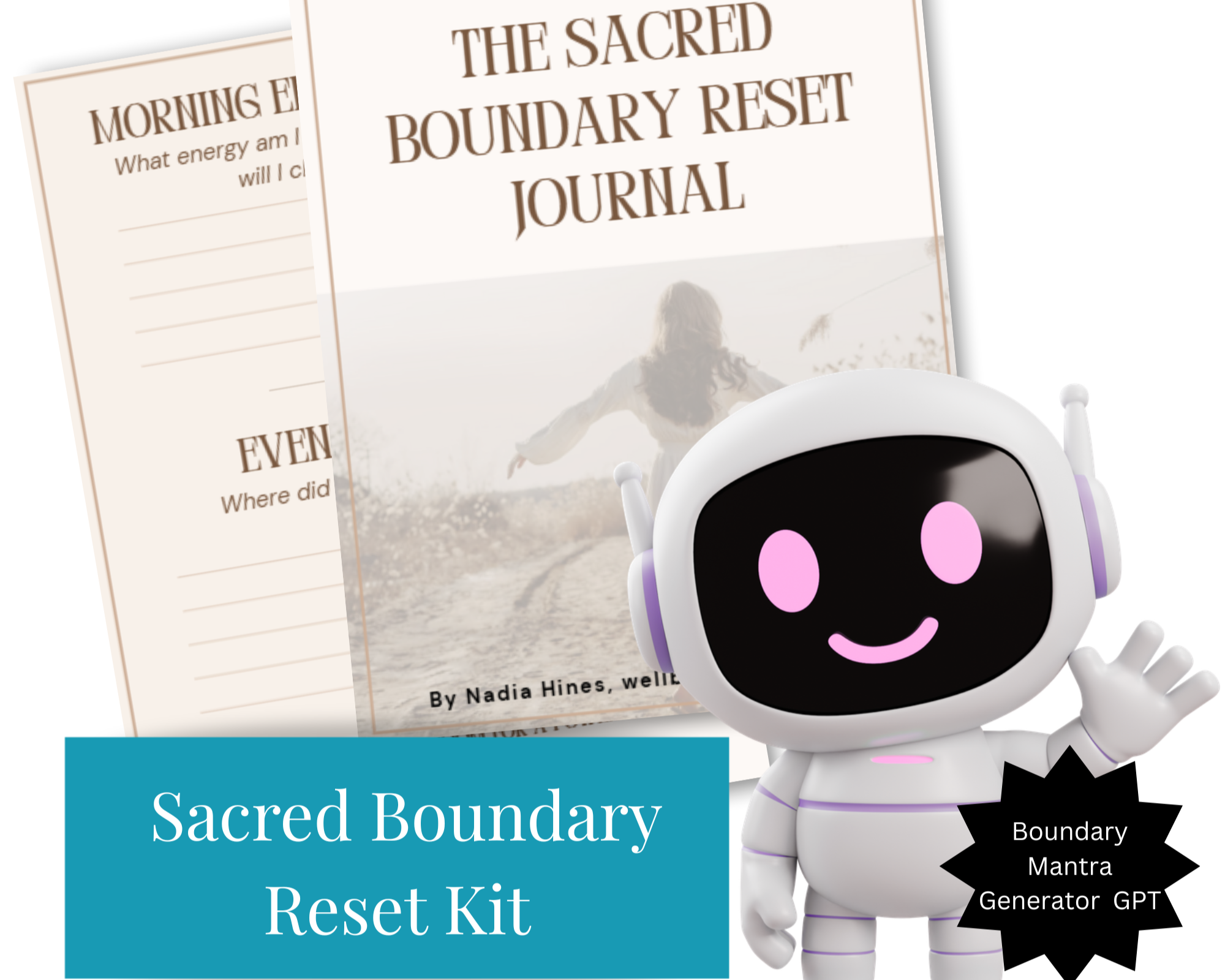
My Sacred Boundary Reset Kit is a simple, self-guided digital toolkit designed to help you explore your boundaries, become more aware of overgiving patterns, and communicate your needs with greater confidence.
Inside, you'll receive:
7-Day Boundary Reset Journal: Thoughtful prompts to help you explore where your boundaries need attention.
Energetic Boundary Tracker: A practical way to notice which situations leave you feeling supported and which leave you feeling depleted.
Printable Energy Reset Cards: Gentle reminders you can return to whenever you need a moment to check in with yourself.
Boundary Mantra Generator GPT: A supportive AI tool to help you put your needs and intentions into words.
It's designed to fit into real life.
No complicated routines.
No pressure to become a completely different person.
Just a gentle way to begin making more intentional choices about where your time and energy go.
👉Explore My Sacred Boundary Reset Kit
Because being a loving, generous person shouldn't mean forgetting about yourself.
Frequently Asked Questions About Holiday Boundaries
How do I set boundaries with family without feeling guilty?
Start by identifying what you realistically can and cannot manage. Communicate your limits kindly and clearly, without lengthy justifications. Guilt may still arise, especially if you're changing a familiar pattern, but discomfort doesn't automatically mean your boundary is unreasonable.
Is it selfish to say no to family during the holidays?
Not necessarily. Saying no to an invitation or request can be a reasonable way to protect your time, finances, health, or other responsibilities. Healthy relationships make room for different needs and honest communication.
What do I do when someone ignores my boundaries?
Try calmly repeating your boundary and explaining what you will do if it isn't respected. Focus on actions within your control rather than trying to force someone else to change. If a relationship involves intimidation, coercion, or abuse, seek appropriate support rather than relying on boundary scripts alone.
How can I stop people-pleasing during the holidays?
Begin by pausing before agreeing to requests. Ask yourself whether you're saying yes because you genuinely want to or because you're afraid of someone's reaction. Practise small, respectful boundaries and gradually build confidence.
How do I protect my peace when I can't avoid difficult family gatherings?
Consider limiting the length of your visit, planning breaks, choosing topics you won't engage in, and arranging your own transportation when possible. If a gathering is unsafe, prioritizing your safety is more important than maintaining a tradition.
Final Thoughts: You Deserve to Enjoy the Holidays, Too
Here's what I hope you remember this holiday season.
You don't have to create the perfect celebration.
You don't have to attend every gathering.
You don't have to buy every gift.
You don't have to keep everyone happy.
And you don't have to exhaust yourself proving how much you care.
The people in your life matter.
But so do you.
Your time matters.
Your energy matters.
Your peace matters.
And perhaps this year, instead of asking how you can make the holidays wonderful for everyone else, you could ask yourself something different.
"What would a meaningful, enjoyable holiday season look like for me?"
Maybe it's a quieter calendar.
Simpler traditions.
More genuine connection.
Fewer obligations.
Or finally giving yourself permission to say no without spending the rest of the evening feeling guilty.
Whatever it looks like, you're allowed to consider your own needs.
Because the holidays aren't supposed to be something you simply survive.
You deserve to experience them, too.