
Have you ever noticed how your mood seems to change when the days start getting shorter?
One minute, you're enjoying the beautiful autumn colours, cozy sweaters, and warm cups of tea.
And the next, you're wondering why everything suddenly feels a little heavier.
You might feel less motivated.
A little more emotional than usual.
Maybe you're finding it harder to get out of bed in the morning, or you're looking at the clock at 5 p.m., wondering how it can possibly be dark already.
And you think to yourself...
Why do I feel so different at this time of year?
If this sounds familiar, you're certainly not the only one.
For many women, the transition into late autumn and winter brings noticeable changes in mood, sleep, and motivation.
We often refer to this as the winter blues.
But what exactly are the winter blues? Why can shorter days affect how we feel? And how do we support ourselves without turning seasonal self-care into yet another full-time job?
Let's explore.
Why Do Shorter Days Affect Your Mood?
Our bodies respond to light in some pretty remarkable ways.
Natural daylight helps regulate our internal body clock, also called our circadian rhythm.
This internal clock influences when we feel awake, when we feel sleepy, and several processes that affect our daily wellbeing.
When autumn arrives and the amount of daylight decreases, our bodies have to adjust to a different light-dark cycle.
And for some people, that transition isn't particularly smooth.
Researchers believe that changes in daylight exposure can influence sleep-wake rhythms and mood-related chemicals, including melatonin and serotonin.
Melatonin helps regulate sleep.
Serotonin is involved in mood regulation.
Both are connected to the body's daily rhythms, which respond to light and darkness.
This doesn't mean that every bad mood in November is caused by a chemical imbalance.
It simply means there's a genuine biological relationship between daylight, our internal rhythms, and how we feel.
And sometimes, the changing season is worth considering when you're trying to understand what's different.
What Are the Winter Blues?
The term winter blues generally describes milder changes in mood and energy that some people experience during the darker months.
Maybe you're still going about your normal routine, but everything feels like it's taking a little more effort.
You might notice:
Feeling a little sadder or more emotional than usual.
Having less motivation to do things you normally enjoy.
Wanting to stay home more often.
Finding it harder to get going in the morning.
Feeling sleepier or wanting more rest.
Having less enthusiasm for social activities.
These experiences don't automatically mean you have depression.
Sometimes they're temporary adjustments to seasonal changes.
But here's something important.
Not every change in mood should be dismissed as the winter blues.
If you're feeling persistently low, losing interest in things you usually enjoy, or finding daily life increasingly difficult, it's worth looking more closely at what's happening.
That's where understanding seasonal affective disorder becomes important.
Winter Blues vs. Seasonal Affective Disorder: What's the Difference?
You may have heard of seasonal affective disorder, often shortened to SAD.
Although the terms are sometimes used interchangeably, winter blues and SAD are not the same thing.
The Winter Blues
Winter blues is an informal description of milder seasonal changes in mood.
You might feel less enthusiastic, a little sluggish, or more drawn toward quiet evenings at home.
But you're generally still able to manage your daily responsibilities and find enjoyment in life.
Seasonal Affective Disorder (SAD)
Seasonal affective disorder is a form of depression that follows a recurring seasonal pattern.
For many people, symptoms begin in the autumn or early winter and improve as spring arrives.
Symptoms may include:
Persistent low mood.
Loss of interest in activities you usually enjoy.
Changes in sleep, including sleeping much more than usual.
Difficulty concentrating.
Increased appetite or cravings.
Social withdrawal.
Feelings of hopelessness or worthlessness.
SAD can significantly affect everyday life, relationships, and the ability to function.
It also deserves proper attention and professional care.
According to the National Institute of Mental Health, women are more likely than men to experience SAD.
If you're experiencing symptoms of depression, particularly when they last more than two weeks or interfere with everyday life, speak with a qualified healthcare professional.
You don't need to wait until another winter has passed to ask for help.
Why November Can Feel Particularly Difficult
There's something interesting about November.
In many parts of the Northern Hemisphere, we're no longer enjoying those long summer evenings.
The days are getting noticeably shorter.
The mornings may be darker.
The temperature is dropping.
And depending on where you live, you may be spending much more time indoors.
At the same time, life doesn't necessarily slow down.
There's work.
Family.
Appointments.
Holiday planning.
And all the everyday responsibilities that don't magically disappear just because the sun is setting earlier.
You might feel like you should be embracing the cozy season, decorating your home, getting organized for the holidays, and feeling grateful for all the beautiful things around you.
But instead, you're feeling a little flat.
And then comes that familiar question.
Why can't I just snap out of it?
I think that's where we can be a little kinder to ourselves.
You don't have to feel cheerful simply because the season looks beautiful on Instagram.
And you don't have to interpret every change in mood as a personal failure.
Sometimes the most helpful thing you can do is acknowledge that something feels different and begin exploring why.

Six Gentle Ways to Support Your Mood During the Darker Months
If you've followed me for a while, you know I'm not interested in giving you another complicated wellness routine.
Most of us already have enough things on our to-do lists.
So instead of trying to overhaul your entire life for winter, let's look at a few realistic ways to support your wellbeing.
1. Make Natural Daylight Part of Your Day
I know.
When it's cold, grey, and windy outside, going for a walk might not sound particularly appealing.
But natural daylight is one of the cues that helps regulate our sleep-wake cycle.
If possible, try spending some time outdoors during daylight hours.
It could be a short morning walk.
A few minutes outside with your tea.
Or stepping out during your lunch break instead of staying indoors all day.
You don't have to turn it into a workout.
And you certainly don't need perfect weather.
Just look for small opportunities to experience natural daylight.
2. Keep a Gentle, Consistent Sleep Schedule
When the evenings get darker, it's tempting to crawl into bed earlier, sleep in whenever possible, and let your routine drift.
And sometimes extra rest is exactly what you need.
But regular sleep and wake times can help support your internal body clock.
Try keeping your morning wake-up time relatively consistent.
Create a calming evening environment.
And give yourself a little space away from screens before bedtime if you find they keep your mind busy.
You don't need an elaborate bedtime ritual.
Consistency matters more than perfection.
3. Keep Moving in Ways You Actually Enjoy
Let's be clear about something.
You don't have to force yourself into an intense workout when you're feeling emotionally flat.
Movement can be simple.
A walk outside.
Gentle stretching.
Dancing around your kitchen.
A yoga class.
Or putting on your favourite music and moving however feels good.
Regular physical activity can support mood and overall wellbeing.
The goal isn't to burn calories or achieve a fitness milestone.
It's to find movement that feels manageable and enjoyable for you.
4. Don't Disappear From the People Who Matter
Have you noticed how easy it is to retreat into your own little world when the weather gets colder?
Sometimes solitude feels wonderful.
And there's absolutely nothing wrong with needing quiet time.
But there's a difference between enjoying your own company and gradually becoming disconnected from the people who support you.
If you've been turning down every invitation or avoiding conversations because you don't feel like yourself, consider reaching out to someone you trust.
It doesn't have to be a big social event.
A phone call.
Coffee with a friend.
A walk with someone you love.
Small moments of connection can make the darker months feel less isolating.
5. Make Space for Things That Bring You Joy
This one sounds simple, but I think it's often the first thing we forget.
When life becomes busy, the things we enjoy tend to fall to the bottom of the list.
We focus on everything we need to accomplish.
And somewhere along the way, joy becomes something we'll get around to later.
But what if we stopped treating enjoyment like an optional reward?
Maybe you love reading.
Creating something with your hands.
Listening to music.
Cooking a beautiful meal.
Spending time in nature.
Or sitting quietly with a warm cup of tea and absolutely nothing demanding your attention.
Whatever brings you genuine enjoyment, try making a little room for it.
Not because it's another wellness task.
But because your life deserves to include things that feel good.
6. Stop Guessing and Start Noticing Your Patterns
Here's where I'd really love you to get curious.
If you notice your mood shifting every autumn or winter, start paying attention to what happens.
Not obsessively.
Not by tracking every little symptom until you drive yourself crazy.
Just gently.
You might ask yourself:
Am I sleeping more or less than usual?
Have I been spending much time outdoors?
Am I still enjoying the activities I normally love?
Have I been connecting with people?
Does my mood improve when I spend more time in daylight?
Is this affecting my everyday life?
Sometimes writing down a few observations over a couple of weeks can help you identify patterns worth discussing with a healthcare professional.
And if you're unsure what's contributing to how you feel, that's okay.
You don't have to figure it all out by yourself.
What About Light Therapy and Vitamin D?
Whenever we talk about winter mood changes, light therapy and vitamin D tend to come up.
And understandably so.
Light therapy uses a specially designed bright light box to help compensate for reduced daylight exposure.
It is one of the established treatments for winter-pattern seasonal affective disorder.
However, light therapy isn't appropriate for everyone, particularly people with certain eye conditions, medications that increase light sensitivity, or conditions such as bipolar disorder that require additional monitoring.
It's best to discuss it with a healthcare professional before starting.
Vitamin D is another topic that often comes up during winter.
Because sunlight helps our bodies produce vitamin D, levels can sometimes be lower during darker months.
However, research on vitamin D supplements specifically for treating SAD has produced mixed results.
And taking more supplements isn't necessarily the answer.
If you're concerned about your vitamin D status, a healthcare professional can help you decide whether testing or supplementation makes sense.
You don't need to buy another product simply because someone online says everyone should be taking it.
A personalized, evidence-informed approach is much more useful than guessing.
When Should You Seek Professional Support?
Sometimes seasonal mood changes are mild.
Other times they're more significant.
Please don't assume that persistent sadness, hopelessness, or losing interest in life is simply part of winter.
Consider speaking with a healthcare professional if:
Your low mood lasts more than two weeks.
You're struggling to manage everyday responsibilities.
You've lost interest in activities you normally enjoy.
Your sleep or appetite has changed significantly.
You're withdrawing from relationships.
Your symptoms seem to return around the same time every year.
Treatments such as psychotherapy, appropriately supervised light therapy, and medication can be helpful for seasonal affective disorder.
You can explore more information through the Centre for Addiction and Mental Health.
If you're experiencing thoughts of self-harm or suicide, seek immediate support through emergency services or a local crisis line. In Canada and the United States, you can call or text 988.
You deserve support that takes your experience seriously.
Tired of Guessing What Your Body Needs? Start With 7 Days.
One of the things I've noticed is how exhausting it can feel when you're constantly trying to figure out what your body needs.
Is it stress?
Is it hormones?
Is it the change in seasons?
Do you need more rest?
A different routine?
Another supplement?
Sometimes the endless searching becomes overwhelming all on its own.
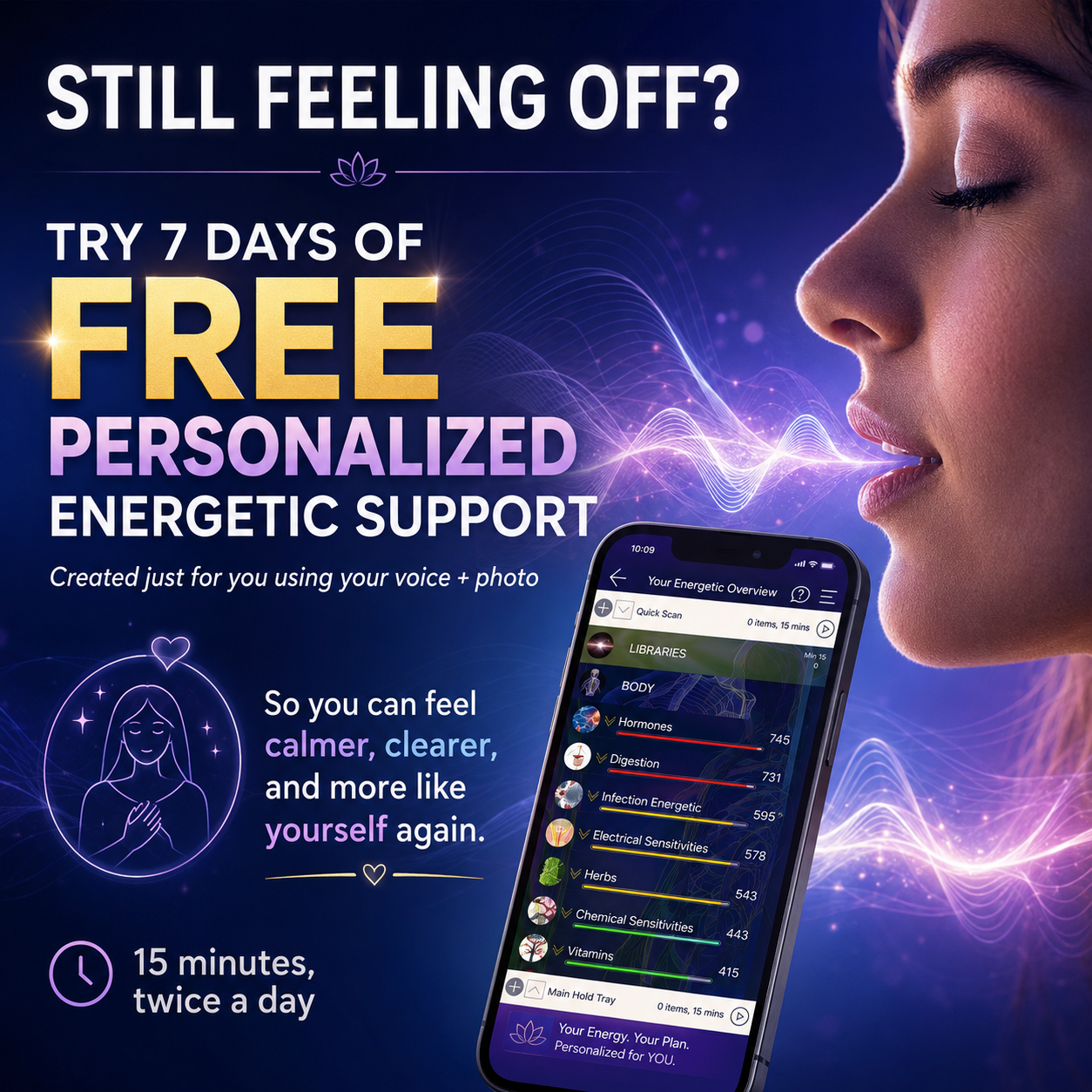
And that's one of the reasons I created my FREE 7-Day Personalized Energetic Support Experience.
It's designed for women who are curious about exploring their overall wellbeing through a more personalized approach.
Rather than asking you to add another complicated wellness routine, the experience is simple.
Here's what's included:
7 days of personalized energetic support, selected specifically for you and accessed through the free Insight Health app.
Your Personalized Energetic Report, offering an easy-to-understand summary of patterns highlighted by the energetic assessment.
Simple listening sessions, approximately 15 minutes twice a day.
Support from me, including check-ins throughout the seven days.
This experience isn't a medical test and doesn't diagnose or treat depression, seasonal affective disorder, or other health conditions.
It's an optional complementary wellness experience for women who enjoy exploring different ways to reflect on and support their overall wellbeing.
And you don't need to abandon your current healthcare or wellness practices to explore it.
👉Explore My FREE 7-Day Personalized Energetic Support Experience
Because understanding yourself shouldn't require another overwhelming to-do list.
Frequently Asked Questions About the Winter Blues
Why do I feel sad when the days get shorter?
Reduced daylight can influence the body's circadian rhythms and processes involved in sleep and mood. Some people notice mild seasonal changes, while others experience more significant symptoms that may warrant professional assessment.
Are the winter blues the same as seasonal depression?
No. Winter blues is an informal term for milder seasonal mood changes. Seasonal affective disorder is a form of depression that follows a recurring seasonal pattern and can significantly affect daily life.
Can you experience the winter blues in November?
Yes. For people in the Northern Hemisphere, seasonal mood changes can begin during autumn as daylight hours decrease. Timing varies depending on the person and location.
Does getting outside help with the winter blues?
Natural daylight exposure and regular physical activity are reasonable self-care strategies for mild seasonal changes in mood. However, they aren't substitutes for professional treatment when someone is experiencing depression.
How do I know if I have seasonal affective disorder?
A healthcare professional can assess your symptoms, how long they've lasted, how much they affect your daily life, and whether they follow a recurring seasonal pattern.
Final Thoughts: You Don't Have to Fight the Season
There's something beautiful about the changing seasons.
Nature doesn't look the same all year long.
Some months are filled with growth, movement, and activity.
Others are quieter.
Slower.
More reflective.
And while I love the idea of honouring those natural rhythms, I also believe it's important to pay attention when our emotional wellbeing changes.
We don't need to romanticize feeling unwell.
And we don't need to push through persistent symptoms simply because we're told winter is supposed to be a slower season.
What we can do is become more aware.
More curious.
And a little more intentional about how we support ourselves.
So if you've been feeling down as the days get shorter, consider this your invitation to check in with yourself.
Notice what you're experiencing.
Make room for daylight, movement, connection, and the things that bring you joy.
Reach out for professional support when you need it.
And remember that you don't have to keep guessing your way through how you feel.
Sometimes understanding begins with something as simple as paying attention.
Wellness Note: This article is intended for educational purposes and is not a substitute for professional medical or mental health advice. Personalized energetic support is a complementary wellness offering and is not intended to diagnose, treat, or cure medical or mental health conditions.